01 / ORGANIZE
Organise the team around a goal
Bind projects and a role roster to a workspace. Split the goal into staged tasks so each one maps to a role and its responsibilities.
WORKSPACE · ROSTER · GOAL
 Legion
Publish the goal, organise the work, keep execution moving.
Track progress, review results and accept delivery in one workspace.
Local-first / Role-based teamwork / Traceable delivery
Start from a single goal and connect the division of labour, the execution and the acceptance.
Every agent knows its job; you can see the whole board.
Bind projects and a role roster to a workspace. Split the goal into staged tasks so each one maps to a role and its responsibilities.
When a preceding task completes, the next role takes over. It stops when your decision is needed, and supports pause, reassignment and rework.
File changes, test results and delivery artifacts are attached to the task. Open it and you can see the result and where it came from.
Find your collaborators by workspace and role.
Conversation, task records and follow-up requests meet in one place.
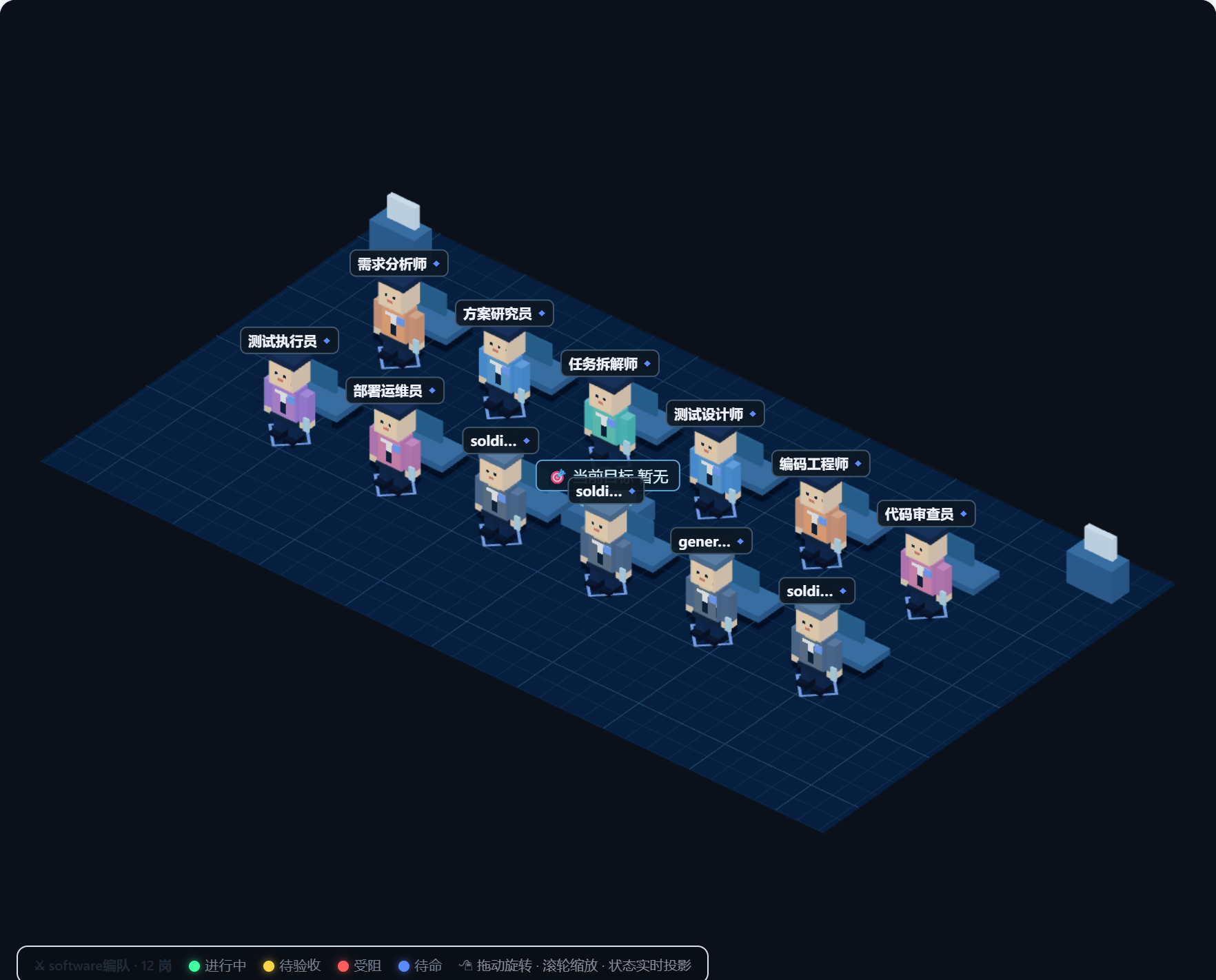
In the 3D scene each crew member has a place and a posture.
Who is busy, who is waiting on you, who is stuck — no click needed.
Stage documents keep the process; acceptance records keep the basis.
Rules, skills and experience are managed per workspace and feed later tasks.
Example artifact types · what a given task actually delivers may differ
The workbench and project data are yours to manage; when you use a remote model, the relevant context is still sent to that model service.
Nothing to install: open it in a browser and it is the workbench.
On a computer it opens as the full workbench; on a phone it is the same thing in your pocket — one address, no app to install.
This Hub is open for sign-up — open it to register.
A task you filed, a message you wrote, a status you changed on your computer is already there when you open it on your phone: it lives in the same database. Change device, not data — and there is no "sync" step.